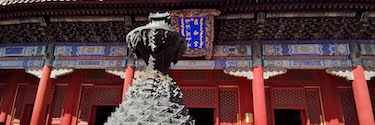
Xiamen, the coastal jewel of Fujian Province, blends its maritime charm with the lively atmosphere of a contemporary city. Set against the island-studded coastline, tales of its trading past are as vibrant as the waves. Xiamen extends beyond its renowned seafood cuisine, offering cultural pearls like the Nanputuo Temple and the Hulishan Fortress. Whether wandering through the artistic enclaves on Gulangyu Island or enjoying the traditional Nanyin music, visitors meet a city where historical elegance meets modern flair, distinguishing Xiamen as an enchanting nexus in China’s immense mosaic.
Quick facts
– Population: Approximately 3.5 million (as of the latest available data).
– Area: 1,699 km² (roughly equivalent to about the size of London, UK).
– Language Spoken: Mandarin (with regional Minnan and Hokkien dialects).
Most important spots to visit & how long to stay
– Major historical sites and visits: Gulangyu Island, Nanputuo Temple, Hulishan Fortress, Xiamen University, Zhongshan Road.
– Recommended duration for exploration: A minimum of 1.5 days is essential to cover the basics.
Where to stay
For luxury travelers, besides the international luxury hotels such as Waldorf Astoria, Shangri-La, Andaz, Indigo, InterContinental, etc., the local luxury boutique hotel, Tsingpu Tulou Retreat, and Lohkah Hotel & Spa are also outstanding options..
Unique and exclusive experiences
– XXXXXX.
Culinary Delights
– Sea Worm Jelly (Tu Sun Dong): A unique jelly-like dish made from sea worms, served with vinegar, garlic, and chili, known for its health benefits.
– Fujian-style Fried Rice (Fujian Chao Fan): Characterized by its rich umami flavor, it’s made with a variety of seafood, meats, and vegetables.
– Peanut Soup (Hua Sheng Tang): A sweet soup made from boiled peanuts, often enjoyed as a dessert or snack.
– Satay Noodles (Sha Cha Mian): Noodles served in a rich, spicy satay broth, typically accompanied by seafood or meat.
– Spring Roll (Chun Juan): Crispy rolls filled with vegetables and sometimes meat or seafood, a popular snack or appetizer.
Local Tips & Recommendations
– Best modes of transport within the city: XXXX.
– Weather: Xiamen, with its coastal allure, experiences a humid subtropical climate. Summers are hot and wet with temperatures fluctuating between 24°C to 34°C (75°F to 93°F), and winters are mild and dry, seeing temperatures from 10°C to 20°C (50°F to 68°F). Renowned for its beaches, islands, and colonial architecture, Xiamen is a favored destination throughout the year, presenting a harmonious blend of urban and natural beauty.
A few curiosities most people don’t know about the city
– Xiamen was formerly known as “Amoy” during its colonial days.
– It houses the UNESCO World Heritage Site, Gulangyu Island, known for its colonial-era architecture and absence of motor vehicles.
– Xiamen University is one of the most beautiful campuses in China, boasting old traditional-style buildings and scenic views of the ocean.
– The city was one of the four original Special Economic Zones opened to foreign investment and trade in the 1980s.
– Xiamen has a unique snack called “Peanut Soup,” a sweet dessert that confuses many visitors with its name.
Final thoughts & conclusion
Perched on the southeast coast of China, kissed by the waves of the Taiwan Strait, Xiamen is an ode to coastal charm and modern vibrancy. Its Gulangyu Island, devoid of vehicular noise, is a sanctuary of architectural wonder and tranquility. With colonial-style buildings, sandy beaches, and the sounds of the sea, Xiamen transports its visitors into a melodious symphony of nature and urban allure. It’s more than just a seaside city; it’s a journey through China’s harmonious blend of the past and the present.